What Slows Auction Business Growth Most
Updated: Jul 10
Most auction businesses assume growth is limited by bidder demand. In reality, growth is often limited by operational capacity. Long before you run out of buyers, you run out of systems capable of handling more auctions, more lots, and more complexity.
The auction companies that scale successfully are not necessarily the ones attracting the most bidders. They are the ones that remove operational bottlenecks before those bottlenecks become business constraints.

Manual Lot Creation Becomes Unsustainable At Scale
Many auction businesses underestimate how quickly lot preparation consumes staff resources.
Creating 100 lots manually is manageable. Creating 1,500 lots every week is a different challenge entirely. At higher volumes, even spending three extra minutes per lot creates 75 additional labor hours across 1,500 lots.
This is where auction software can have a measurable operational impact. AI-assisted lot creation reduces repetitive cataloging work by generating titles, descriptions, and categorization from photos and basic information. The goal is not replacing staff expertise. The goal is allowing experienced staff to focus on exceptions rather than routine data entry.
You have probably experienced the moment when catalog production starts dictating your schedule instead of supporting it.
Disconnected Systems Create Hidden Labor Costs
Many established auction businesses operate with a patchwork of software that accumulated over time.
One system manages bidder registration. Another handles invoicing. A third manages inventory. A fourth sends marketing communications. Staff spend hours moving information between platforms because the systems were never designed to work together.
The problem is rarely visible on a profit-and-loss statement. Instead, it appears as delayed auction launches, duplicate data entry, invoice corrections, and administrative work that seems impossible to eliminate.
That is why many larger firms evaluate auction management software based on consolidation rather than features alone. Reducing the number of systems involved in an auction often creates more value than adding another specialized tool.
Bidder Management Gets More Complex As Volume Increases
Growth creates administrative complexity that many auction businesses do not anticipate.
Five hundred active bidders can often be managed through simple processes. Five thousand active bidders create entirely different requirements around registration, verification, communication, payment collection, and support.
The challenge becomes even greater when your business operates multiple auction types simultaneously. Estate sales, liquidation events, equipment auctions, and charity auctions often require different workflows while still maintaining a consistent bidder experience.
Gavel is white label auction software and an auction management platform built to replace the fragmented tools, manual processes, and costly inefficiencies slowing auction businesses down.
Centralized bidder management allows businesses to maintain consistency as participation scales across multiple auctions and business units.
Auction Logistics Often Become The Real Bottleneck
Most auction owners focus heavily on the bidding process. The operational challenges usually appear after the auction closes.
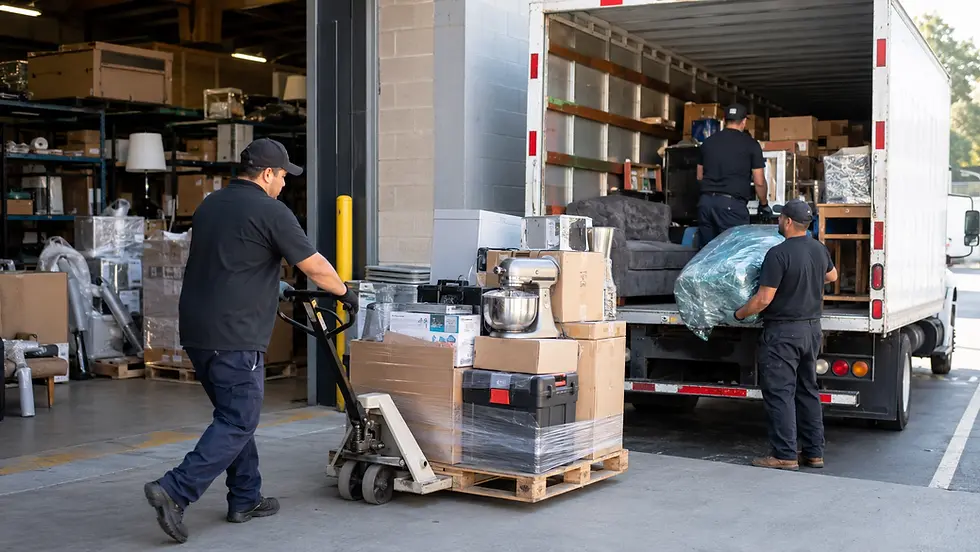
Pickup scheduling, invoicing, payment collection, seller settlements, and inventory release procedures become increasingly difficult as auction volume grows. A business conducting four auctions per month faces a dramatically different logistical challenge than one conducting twenty.
The issue is not whether your team can complete the work. The issue is whether they can complete it repeatedly without creating delays for buyers and consignors.
You know the feeling. The auction itself goes smoothly, but the week after closing feels more stressful than the event itself.
Modern auction management software increasingly focuses on post-sale workflows because operational efficiency after the hammer falls often determines whether growth remains sustainable.
Multiple Auction Formats Require Flexible Technology
Many auction businesses eventually discover that growth opportunities exist outside their original format.
A company focused on online auctions may identify demand for live events. An auctioneer running in-person events may need hybrid capabilities to reach remote bidders. A liquidation business may decide to launch a multi-seller marketplace to expand inventory sources. Technology can either support that expansion or prevent it.
Businesses that select auction software based solely on current needs often find themselves replacing platforms when new opportunities emerge. A more durable approach is selecting technology capable of supporting online, in-person, hybrid, and marketplace auctions from the beginning.
Growth Requires Better Processes, Not Just More Staff
One of the most common mistakes growing auction businesses make is attempting to solve process problems through hiring. Additional staff can temporarily absorb inefficiencies. Eventually those inefficiencies expand alongside the team.
If cataloging requires too much manual work, adding employees only increases payroll. If invoicing depends on spreadsheets, adding employees simply creates more people managing spreadsheets. If bidder communication requires manual effort, growth continues to increase workload at the same rate.
The auction companies that scale most effectively usually focus on process improvement first and staffing second. Technology supports growth best when it removes repetitive work rather than simply documenting it.
The Right Auction Software Removes Constraints Before They Become Problems
The most dangerous growth barriers are often invisible until they begin affecting customer experience. Delayed catalog launches, invoicing errors, bidder communication gaps, and operational bottlenecks rarely appear overnight. They emerge gradually as auction volume increases.
That is why evaluating auction software should involve more than comparing bidding features. The more important question is whether the platform helps your business handle twice its current volume without doubling administrative effort.
The auction companies positioned for long-term growth are typically not the companies chasing the latest feature. They are the companies systematically removing operational constraints before those constraints limit future opportunities.
Have questions about Gavel Auction Software? Visit our FAQ for answers about platform features, setup, and getting started. Ready to talk? Call 816-583-0423 or email hello@mail.gavelauctionsoftware.com.
Learn more about Gavel Auction Software: Online Auctions, In-Person Auctions, Hybrid Auctions, Marketplace Platform, Mobile Auction App